
Metal Straws Australia: Safety, Sustainability + Science
The Straw That Finally Broke the Plastic Habit
Let’s face it – if you’re anything like me – a drinking straw is the last object you would associate with social change and progressive independent thought. Yet our everyday metal drinking straw has become one of the defining symbols of Australia’s broader reckoning with single-use plastic culture. Following a wave of state-level legislative bans, growing consumer awareness around plastic waste, and a decade of sobering marine research from organisations including the Commonwealth Scientific and Industrial Research Organisation (CSIRO), Australians are making a decisive shift away from disposable plastic straws toward reusable alternatives. And the most accessible, the most easily used, and the most durable alternative is the stainless steel straw.
This Metal Straws Australia Guide cuts through the marketing noise to answer the questions Australians are actually asking: Are these straws genuinely safe? Does the environmental maths actually work out? What does Australian law now require? And how does stainless steel stack up against the less robust alternatives – things materials like glass, bamboo, silicone, and paper? The answers — grounded in peer-reviewed research and Australian regulatory frameworks — may surprise you.

What Are Stainless Steel Straws, and How Are They Made?
Quick Answer: Stainless steel straws are reusable drinking tubes manufactured from food-grade steel alloys, most commonly grade 304 (18/8) or grade 316. They are designed to replace single-use plastic straws and are typically sold in sets of two to eight, accompanied by a cleaning brush. Unlike plastic, stainless steel is non-reactive, dishwasher safe, and indefinitely recyclable.
The term “stainless steel” refers to a family of iron-chromium alloys that resist corrosion through a passive chromium oxide layer that forms naturally on the metal’s surface. In the context of reusable straws, two grades dominate the Australian market:
Grade 304 (also labelled 18/8) is the most widely available. The 18/8 designation refers to 18% chromium and 8% nickel content. It is the same alloy used in commercial kitchenware, surgical instruments, and food processing equipment worldwide.
Grade 316 (also labelled 18/10 or Marine Grade) adds 2–3% molybdenum to the alloy, which offers superior resistance to chloride-induced pitting. It is the grade specified in hospital and pharmaceutical environments and is increasingly offered as a premium option in the reusable straw market.
Both grades must comply with Food Standards Australia New Zealand (FSANZ) requirements for food contact materials under the Australia New Zealand Food Standards Code, which mandates that food contact surfaces be non-toxic, non-reactive, smooth, and readily cleanable.
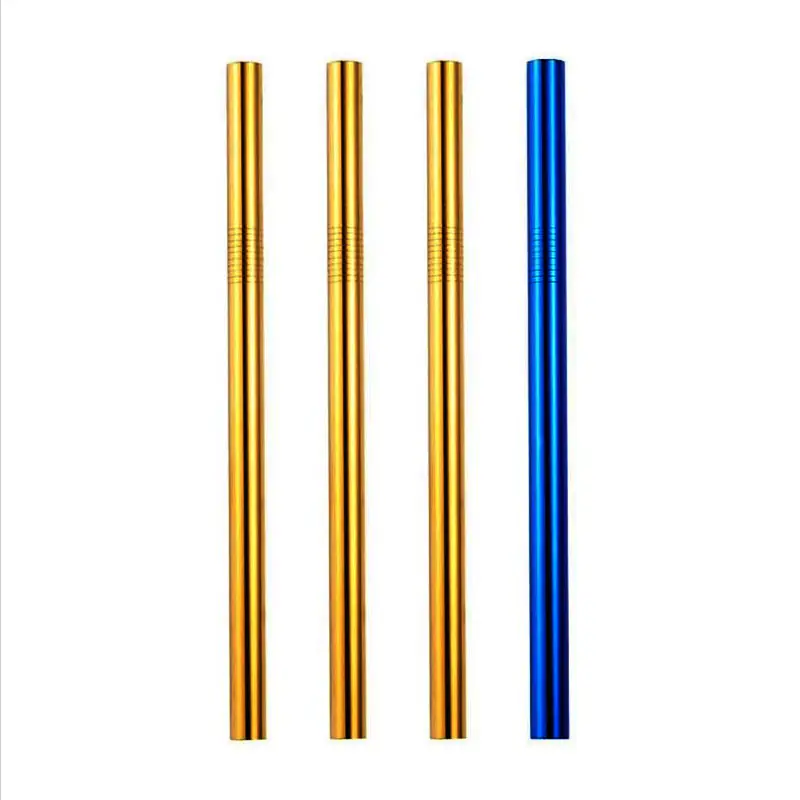
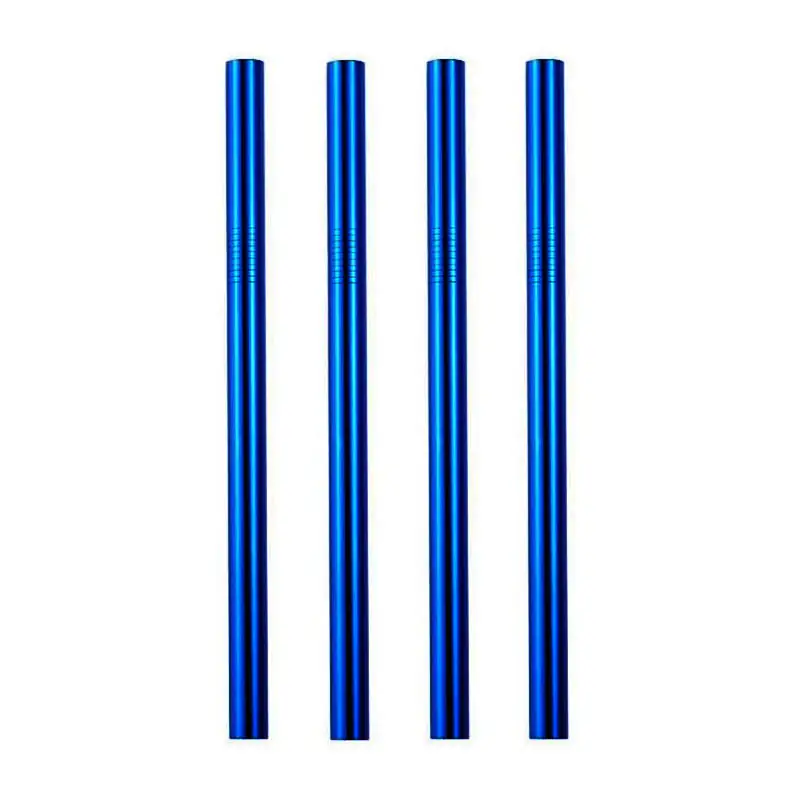
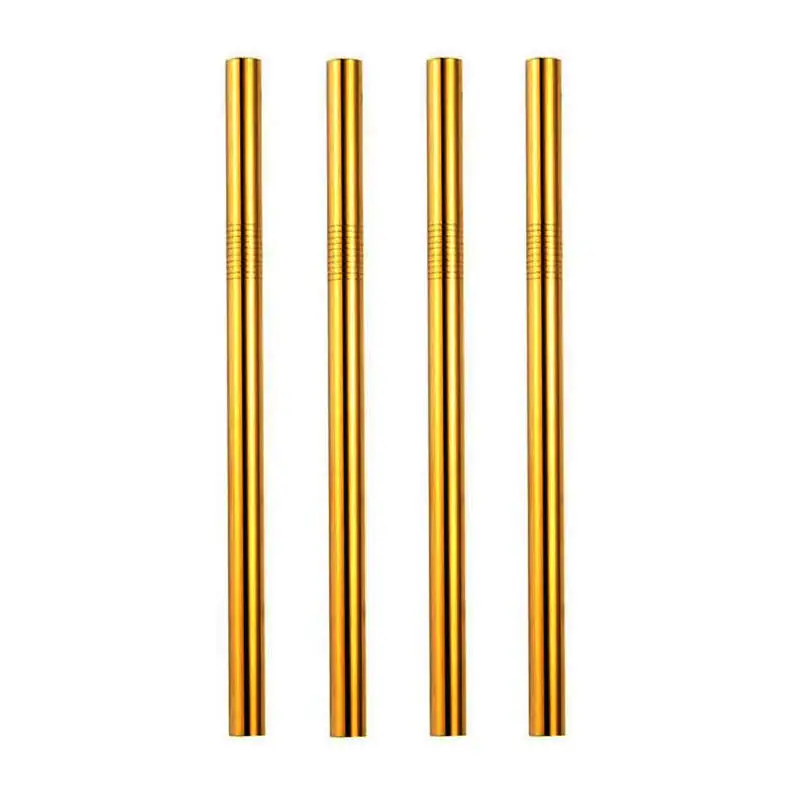
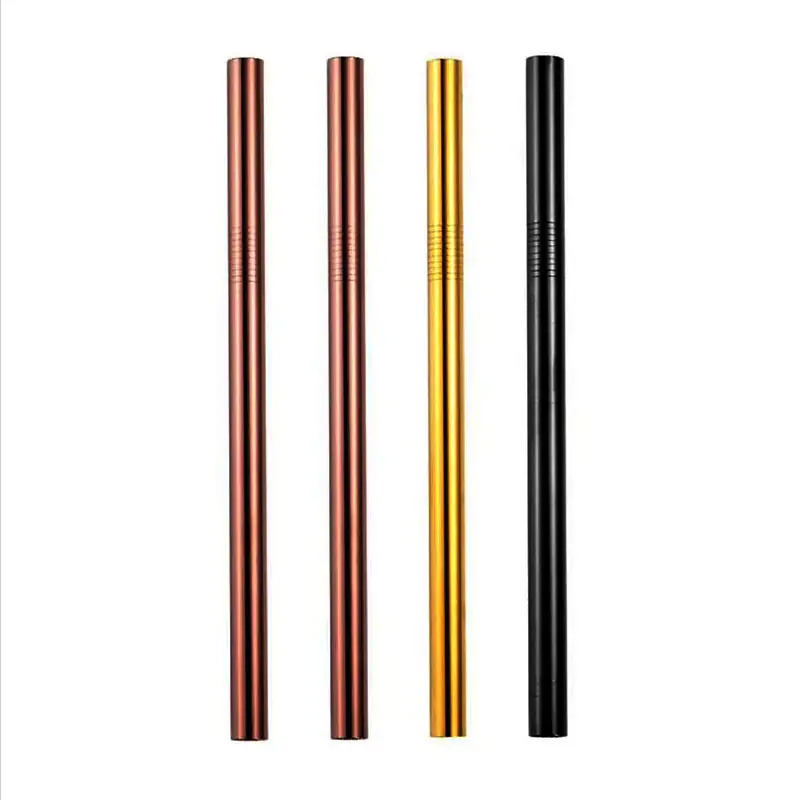
Metal Straws Australia

Aura Azure
$14.95Blue Steel
$14.95Bold Gold
$14.95Champagne Mist
$14.95
Why Are Plastic Straws Being Banned Across Australia?
Quick Answer: Plastic straws are being phased out across every Australian state and territory because they are among the most prevalent forms of plastic litter in marine environments, they cannot be mechanically recycled, and they persist in ecosystems for up to 200 years. Australian Government data shows that single-use plastics constitute approximately one million tonnes of annual plastic consumption nationally.
How Much Plastic Waste Does Australia Actually Produce?
The scale of Australia’s plastic challenge is considerable. According to the Department of Climate Change, Energy, the Environment and Water (DCCEEW), Australia generates approximately 2.5 million tonnes of plastic waste each year — roughly 100 kilograms per person. Of that total, one million tonnes is classified as single-use plastic, meaning it is designed to be discarded after a single deployment.
The national plastics recycling rate sits at only 13.9%, according to the Australian Plastic Flows and Fates Study 2021–22 published by DCCEEW — meaning 84% of Australia’s plastic waste is directed to landfill. Perhaps most critically, approximately 130,000 tonnes of plastic leaks into Australia’s marine environment every single year.
These figures underpinned the federal government’s National Plastics Plan 2021, a framework that set concrete phase-out timelines for problematic single-use plastic items, including drinking straws.
What Is the Environmental Impact of Plastic Straws on Marine Wildlife?
Plastic straws occupy an outsized environmental footprint relative to their size. Research published by CSIRO’s Marine Debris Program — recognised internationally as among the most comprehensive coastal debris monitoring programmes in existence — documents the direct relationship between single-use plastic items and harm to marine fauna.
CSIRO’s findings are stark: turtles that ingest even a single piece of plastic face a 22% chance of death. Flexible plastics, including lightweight straws, are responsible for the highest mortality rates across marine animals such as whales and dolphins because of their propensity to cause gut blockage. A landmark CSIRO projection found that plastic ingestion in seabirds could affect 95% of all species by 2050 if current trajectories continue unchecked.
The encouraging counterpoint: CSIRO’s 2025 coastal survey, which compared debris density data from 2022–24 against the 2011–14 baseline, found a 39% decrease in plastic pollution along Australian coastlines — a measurable result of legislative action and behavioural change. The full CSIRO findings are available here.
The DCCEEW’s dedicated marine debris page further contextualises the impact: plastic items also smother coral reefs, transport invasive species, create navigation hazards, and carry chemical contaminants that bioaccumulate through the food chain.
Which Australian States Have Banned Plastic Straws, and When?
The regulatory picture has evolved rapidly. As of mid-2026, every Australian jurisdiction has either enacted or commenced the enforcement of plastic straw bans. The table below summarises the key legislative milestones:
| State / Territory | Plastic Straw Ban Status | Key Authority | Medical Exemption? |
|---|---|---|---|
| South Australia | Excluded from sale since 1 Sep 2025 | EPA SA | Yes — on request |
| Australian Capital Territory | Early adopter; ban in place | ACT Government | Yes |
| Queensland | Full ban effective 1 Jan 2026 | QLD Government | Yes |
| New South Wales | Ban effective 1 Jan 2025 | EPA NSW | Yes — on request |
| Victoria | Ban effective 1 Jan 2026 | EPA Victoria | Yes |
| Western Australia | Phase-out underway | State legislation | Yes |
| Tasmania | Phase-out underway | State legislation | Yes |
| Northern Territory | Phase-out underway | State legislation | Yes |
A critical nuance across all jurisdictions: exemptions exist for individuals with a disability or documented medical need who require a flexible plastic straw. No jurisdiction mandates a rigid alternative where accessibility is a genuine barrier. Any business concerned about compliance obligations should consult their relevant state EPA directly for current guidance.
The NSW Government estimates its bans will collectively prevent nearly 2.7 billion plastic items from entering coastal, marine, and bushland environments over the next 20 years. The state has already exceeded its 30% plastic litter reduction target for 2025, recording a 45% reduction compared to its baseline year, according to the NSW EPA.

Are Stainless Steel Straws Safe to Use?
Quick Answer: Yes. Food-grade stainless steel (grades 304 and 316) is non-reactive, non-porous, BPA-free, and compliant with the Australia New Zealand Food Standards Code administered by FSANZ. The material does not leach chemicals into beverages under normal conditions. The principal safety consideration involves physical design — sharp edges and rigidity — rather than chemical exposure.
What Grade of Stainless Steel Is Safe for Drinking?
The relevant regulatory framework is the Australia New Zealand Food Standards Code, enforced by FSANZ in cooperation with state and territory food authorities. Standard 3.2.2 of the Code requires food contact materials to be “fit for their intended use” and not likely to contaminate food or beverages.
Grade 304 (18/8) stainless steel fully satisfies these requirements. The chromium oxide layer that gives stainless steel its corrosion resistance also renders it chemically inert at normal beverage temperatures and pH levels — including acidic drinks such as citrus juice, sparkling water, or kombucha. The metal does not impart taste or odour to beverages.
Grade 316 offers marginally higher chemical resistance, making it the preferred specification for high-saline or high-acid environments, though for home beverage use the practical difference between 304 and 316 is negligible.
What to look for on product labelling:
- “18/8 Stainless Steel” — Grade 304 ✓
- “18/10 Stainless Steel” — Grade 316 ✓
- “Food Grade Stainless Steel” (without grade specification) — seek clarification from the supplier
- Any straw marketed without a material grade designation warrants scrutiny
Are Stainless Steel Straws Safe for Children?
This is an area where caution is warranted, and manufacturers are increasingly explicit about it. The safety concern is not chemical but physical: stainless steel straws are rigid, and a child who falls or trips while a metal straw is in their mouth faces a real risk of oral or throat injury.
Most reputable Australian and international suppliers address this in two ways. First, many offer silicone tip attachments that soften the contact point and reduce laceration risk. Second, the majority of manufacturers advise that children under 8 years of age should not use metal straws — including those with silicone tips — without close adult supervision. For younger children, flexible silicone straws are widely regarded as the safer category.
For adults — including adults with reduced motor control or those with conditions affecting grip and swallowing — the flexibility and adaptability question is more nuanced. The medical exemptions embedded in each state’s plastic straw legislation acknowledge this reality explicitly: rigidity that suits the average adult may represent a genuine barrier for others.
How Do Stainless Steel Straws Compare to Other Reusable Alternatives?
Quick Answer: Stainless steel straws offer the longest lifespan (typically 5–10+ years), the highest durability, and are dishwasher-safe. Compared to bamboo, glass, silicone, and paper alternatives, stainless steel delivers the strongest environmental return over time — provided it is used consistently and washed efficiently.
Metal Straws Australia: Material by Material
| Material | Avg. Lifespan | Dishwasher Safe | BPA-Free | Recyclable at End-of-Life | Key Limitation |
|---|---|---|---|---|---|
| Stainless Steel (304/316) | 5–10+ years | Yes | Yes | Yes (steel scrap stream) | Rigid; not suitable for unsupervised children |
| Glass (borosilicate) | 3–7 years | Yes | Yes | Theoretically yes (specialised) | Breakage risk; heavier |
| Bamboo | 6–12 months | No (hand-wash only) | Yes | Yes (compostable) | Harbouring of bacteria in micro-cracks; short life |
| Silicone | 1–3 years | Yes | Yes | No (mixed-material waste stream) | Degradation over time with repeated heat exposure |
| Paper | Single-use | No | Yes | Yes (paper recycling) | Structural failure in liquid; taste transfer |
| Plastic (polypropylene) | 1–2 years (reusable grade) | Yes | Often yes | Limited (rarely accepted) | Microplastic degradation; end-of-life contamination |
How Many Times Do You Need to Use a Stainless Steel Straw to Make It Environmentally Worth It?
This is one of the most commonly searched — and most misunderstood — questions in the reusable products category. The answer depends on lifecycle assessment (LCA) methodology, geography, and household washing behaviour.
Published LCA research, including a study in the International Journal of Environmental Research and Public Health, examined the full environmental cost of stainless steel straw production relative to single-use plastic straws. The manufacturing of stainless steel has a higher initial carbon and energy footprint than manufacturing a single disposable plastic straw. However, the environmental break-even point is reached well within the first year of typical use for most household scenarios — some studies put this threshold at as few as 100 to 150 uses.
Crucially, the same research found that over 85% of a stainless steel straw’s lifetime environmental impact comes not from manufacturing but from washing — specifically, the energy and water used in each wash cycle. This means that the environmental credentials of a reusable straw are partly a function of how it is washed:
- Handwashing in cold or warm water is the lowest-impact option.
- Including straws in an already-full dishwasher load adds minimal incremental impact.
- Running a dishwasher specifically for straws significantly erodes the environmental advantage.
The practical implication for Australian households: commit to using the straw consistently, include it in existing dishwasher loads rather than washing it separately, and replace it only when structurally damaged. Under these conditions, the lifecycle advantage over single-use plastic is substantial and well-documented.
How Do You Clean Stainless Steel Straws Properly?
Quick Answer: Stainless steel straws should be rinsed immediately after use, then cleaned with the provided pipe-cleaner brush using warm soapy water, or placed in a dishwasher. For thorough sanitisation — particularly after smoothies or dairy-based drinks — a soak in a diluted white vinegar solution for 10–15 minutes before brushing is effective and food-safe.
Proper hygiene is the single most important factor in safe, long-term use of metal straws. Unlike the smooth outer surface, the inner bore of the straw is narrow and curved — conditions that can support biofilm formation if cleaning is inconsistent.
A practical cleaning protocol:
Immediately after use, rinse the straw under running water to prevent residue from drying and adhering to the interior wall. Within a few hours of use, run the cleaning brush — which should be supplied with any quality straw set — through the bore at least twice, using a small amount of dish soap. Rinse thoroughly. For straws used with thick beverages (smoothies, milkshakes, protein shakes), a 10–15 minute soak in a 1:3 dilution of white vinegar and water before brushing will dissolve residue and neutralise any odour. Stainless steel straws are fully dishwasher compatible at standard cycle temperatures; place them in the cutlery basket in an upright position where possible to allow water circulation through the bore.
What to avoid: Do not use steel wool or abrasive pads on the straw’s interior — scratches create micro-surfaces that are harder to clean and may, over extended time, affect the integrity of the passive oxide layer. Chlorine-based bleach is also unnecessary and counterproductive for stainless steel maintenance.
Where Can You Use Stainless Steel Straws, and Are They Accepted Everywhere?
Quick Answer: Stainless steel straws can be used in any setting where a single-use straw would previously have been offered — cafés, restaurants, home use, events, and outdoor settings. Since Australia’s state-level bans on plastic straws, the majority of hospitality venues have adopted paper or reusable alternatives, making a personal stainless steel straw an increasingly common and welcome sight.
For Businesses and Food Service Operators
Hospitality operators — cafés, restaurants, bars, and catering services — should note that compliance obligations vary by state and are enforced by the relevant EPA or waste authority. In jurisdictions where plastic straw bans are active, businesses face fines for distributing banned single-use items. The most practical path to compliance for high-volume drink service is a combination of:
- Stocking reusable stainless steel or glass straws for dine-in service (washed between uses).
- Offering paper or certified compostable straws for takeaway service where a straw is requested.
- Maintaining a small supply of flexible plastic straws for customers with a documented medical need or disability — all current state legislation includes this exemption.
For detailed, jurisdiction-specific business guidance, the Queensland Government’s business compliance page, NSW EPA guidance, and EPA Victoria each publish regularly updated operator resources.
For Individuals: Carrying Your Own Straw
Carrying a personal stainless steel straw is one of the lower-friction zero-waste habits available to consumers. Most straw sets sold in Australia include a portable carrying case or fabric pouch. A straw in a bag or pocket means that every café visit — regardless of that café’s own policy — can be straw-optional on the customer’s terms.
What the Research Means in Practice
The body of evidence — from CSIRO’s marine debris science, to the DCCEEW’s National Plastics Plan, to the FSANZ food safety framework — tells a coherent and practical story. Plastic straws are being phased out because the cumulative evidence of their environmental harm is no longer deniable. Stainless steel straws satisfy the food safety standards that govern all food contact materials sold in Australia. And the lifecycle data consistently shows that a well-maintained metal straw, used regularly, delivers a net environmental benefit that compounds with every use.
The CSIRO’s 2025 finding of a 39% reduction in coastal debris is evidence that legislation and consumer behaviour change together do move the needle. Each state’s measurable decline in plastic litter density — NSW recording 45% below its baseline — demonstrates that shifts at the individual level aggregate into outcomes at the ecological level.
For most Australian households, the transition from plastic to stainless steel straws is low-cost, low-complexity, and durable. The initial investment is recovered in months. The environmental return is calculated in decades. And the compliance trajectory is one-directional: every remaining Australian jurisdiction either already prohibits plastic straws or will do so imminently.
If you are evaluating which stainless steel straw to purchase — or sourcing reusable options for a food service operation — the key specification criteria are grade (304 as a minimum; 316 for high-acid or high-volume commercial environments), interior bore diameter (8mm suits most beverages; 12mm suits thick smoothies and bubble tea), and the inclusion of a pipe-cleaner brush. Everything else is a design choice.
Frequently Asked Questions
Can stainless steel straws affect the taste of my drink?
No — provided the straw is correctly graded and properly cleaned. Food-grade stainless steel (304 and above) is chemically inert and does not impart metallic flavour to beverages under normal use conditions. A metallic taste is typically a sign of one of three things: a lower-quality alloy below food grade, residual cleaning product not fully rinsed from the bore, or a beverage that is unusually acidic interacting with a surface that has been scratched or damaged. A properly specified, clean, undamaged 304 or 316 stainless straw will not alter the taste of water, juice, smoothies, coffee, or carbonated beverages.
Are stainless steel straws suitable for hot beverages like coffee or tea?
Stainless steel is an effective thermal conductor, which means the straw will quickly reach the temperature of the beverage it is carrying. For very hot drinks, the exterior of the straw can become uncomfortable to hold against the lips. Silicone-tipped variants mitigate this by insulating the contact point. For consistently hot beverages such as chai, matcha lattes, or barista-prepared coffee, a silicone straw or a straw with a heat-resistant tip is a more comfortable long-term choice. There is no food safety concern with using stainless steel in hot beverages — the material is fully stable at normal drinking temperatures.
Is there a standard or certification I should look for when buying stainless steel straws in Australia?
The primary compliance framework is the Australia New Zealand Food Standards Code administered by FSANZ, which requires food contact materials to be non-toxic, non-reactive, and readily cleanable. Look for products that explicitly state the stainless steel grade (304 or 316 / 18/8 or 18/10). The Australian Standard AS 1528 series covers hygienic stainless steel tube and fittings for food-grade manufacturing and is a relevant benchmark for commercial-grade sourcing. For household purchases, a clearly labelled steel grade from a reputable Australian supplier is the most practical indicator of compliance.
Can I put my stainless steel straw in the recycling bin at end-of-life?
Not in a standard yellow-lid kerbside recycling bin in most Australian councils — the straw’s small size and tubular form means it can jam sorting machinery. The correct disposal pathway is through a scrap metal collection point, which accepts all grades of stainless steel for remelting. Many council transfer stations and metal recycling services accept stainless steel items. Alternatively, some Australian eco-retailers offer take-back or collection programmes for damaged reusable items. The significant advantage over plastic is that stainless steel is a truly closed-loop recyclable: it can be remelted and reused indefinitely without quality degradation, unlike most plastic polymers.